
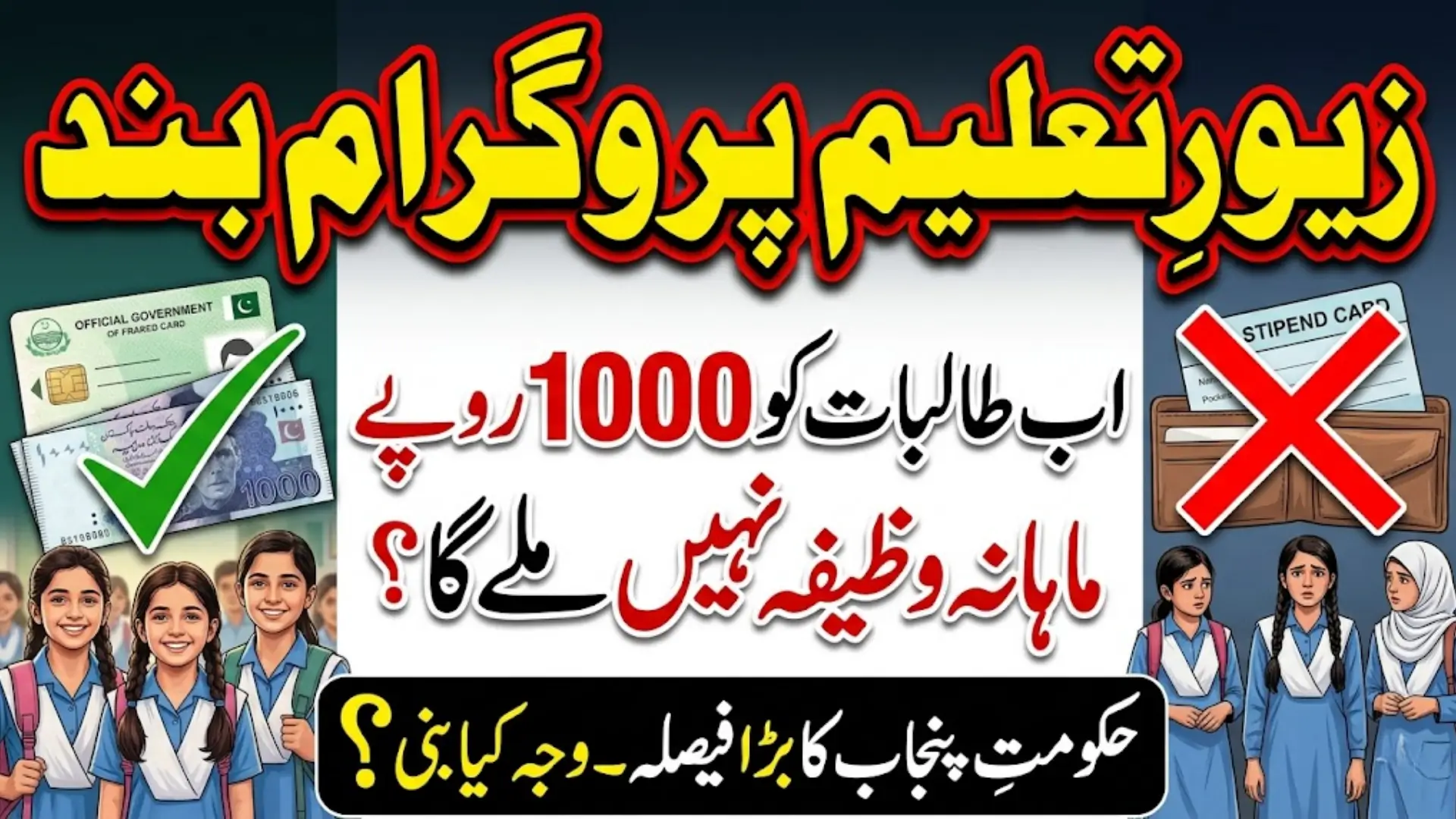
Zewar-e-Taleem Program Closed in Punjab
Zewar-e-Taleem Program Closed in Punjab A major development has taken place in the education sector of Punjab in 2026, as the government has officially decided to close the Zewar-e-Taleem Program. This scheme was specifically designed to support female students studying in government schools, especially those belonging to low-income families. Through this initiative, eligible girls were receiving a monthly stipend of Rs. 1000 to help them continue their education without financial pressure.
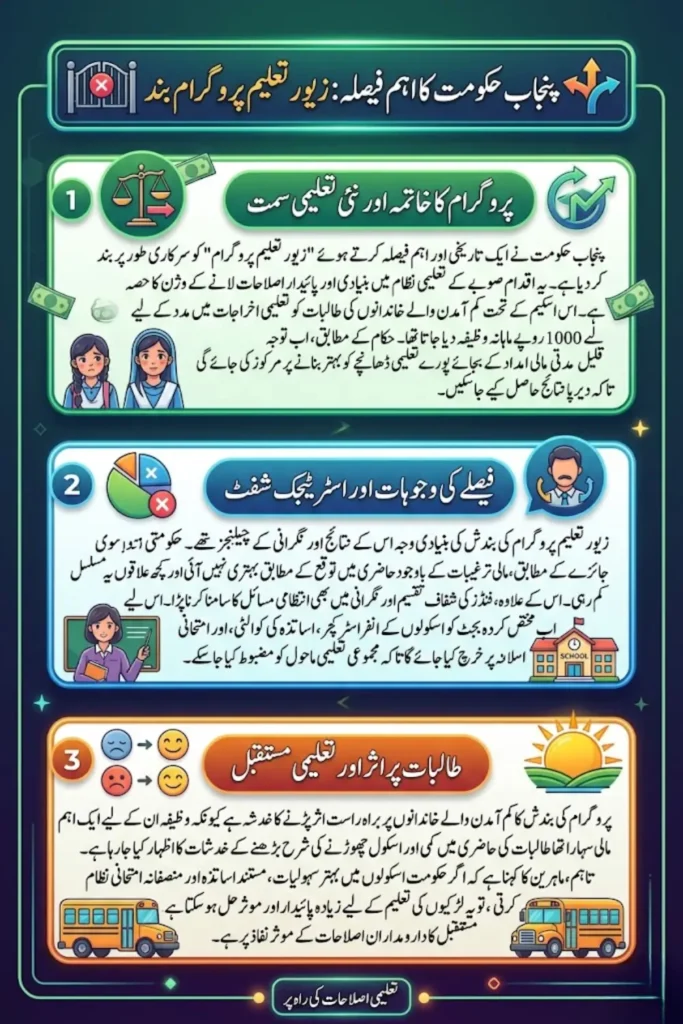
This decision has created a strong reaction among students, parents, and teachers across Punjab. While some people believe this move will help improve the overall education system, others are concerned about its immediate impact on girls who relied on this financial support. According to officials, the focus is now shifting from short-term financial aid to long-term structural improvements in the education sector.
You Can Also Read: CM Punjab Climate Leadership Development
Background of the Zewar-e-Taleem Initiative
The Zewar-e-Taleem Program was launched as a targeted initiative to promote girls’ education in Punjab. In many areas of Pakistan, especially rural regions, female education still faces multiple challenges such as poverty, lack of transport, and social barriers. This program aimed to reduce these challenges and encourage families to send their daughters to school regularly.
Initially, the scheme showed positive results, as many families started enrolling their daughters in schools again. The Rs. 1000 monthly stipend, although small, played an important role in supporting basic educational expenses. It also helped raise awareness about the importance of girls’ education and encouraged consistent school attendance.
- Monthly stipend of Rs. 1000
- Special focus on female students
- Applicable only in government schools
- Coverage from Class 6th to 10th
Eligibility Criteria That Was Required
To receive benefits under this scheme, students had to meet specific eligibility conditions. The most important requirement was maintaining a minimum attendance level. The government believed that linking financial support with attendance would motivate students to stay regular in school.
In addition, the program was limited to selected districts and only applied to students enrolled in government schools. The payment system was made transparent by introducing a card-based system through which stipends were distributed directly to beneficiaries.
Main eligibility conditions were:
- Minimum 80% attendance required
- Enrollment in a government school
- Applicable only in 16 selected districts
- Payment through card-based system
You Can Also Read: 8171 Web Portal 13500 Payment Status 2026
Main Reasons Behind Program Closure
According to government officials, the Zewar-e-Taleem Program did not achieve the expected outcomes. Although it was designed to increase attendance, the improvement was not consistent across all regions. In some areas, attendance remained low despite the financial incentive.
Additionally, administrative challenges were reported, including issues in monitoring attendance, verifying data, and ensuring proper distribution of funds. When a large budget is allocated to a program, its effectiveness becomes critical. After reviewing the overall performance, the government decided to discontinue the scheme and adopt a new strategy.
Key reasons for closure include:
- Limited improvement in attendance
- Implementation and monitoring challenges
- Inefficient use of allocated budget
- Policy review leading to strategic shift
Government New Education Strategy
With the closure of the program, the government has introduced a new direction for the education sector. Instead of providing direct financial assistance, the focus will now be on improving the overall education system. This includes investing in infrastructure, teacher quality, and examination reforms.
Experts believe that strengthening the system itself can produce more sustainable results. When schools offer better facilities, qualified teachers, and a fair examination system, students are naturally encouraged to perform better and attend regularly.
Highlights of the new strategy:
- Improvement in school infrastructure
- Recruitment of qualified teachers
- Reforms in examination system
- Focus on long-term development
You Can Also Read: Sindh Government Clarifies Holiday Extension
Where Will the Budget Be Used Now
One of the most common questions is how the budget previously used for stipends will now be utilized. The government has clarified that these funds will be redirected toward areas that can bring broader improvements in the education sector.
This shift means that instead of benefiting individual students directly, the funds will now be used to improve facilities and services that can impact a larger number of students across Punjab.
New areas of budget utilization:
- Improvement of school transport systems
- Hiring of new teachers
- Upgrading school facilities
- Reforms in examination processes
| Sector | Expected Benefit |
|---|---|
| School Transport | Easier access for students in remote areas |
| Teacher Recruitment | Better quality education in classrooms |
| Exam Reforms | Transparent and fair evaluation system |
| Infrastructure | Improved learning environment |
Impact on Female Students in Punjab
The closure of the Zewar-e-Taleem Program is expected to have a direct impact on female students, especially those from low-income families. For many households, the Rs. 1000 stipend was a helpful support that contributed to educational expenses.
Without this financial assistance, some families may face difficulties in continuing their daughters’ education. There is also a concern that attendance levels might decrease in certain areas where financial incentives played a key role.
Possible impacts include:
- Loss of financial support
- Risk of decreased school attendance
- Increased concerns among parents
- Higher chances of school dropouts
You Can Also Read: BISP 13500 Cheque Payment 2026 Collection
Expert Opinions on This Decision
Education experts have shared mixed opinions regarding this decision. Some believe that removing financial incentives could negatively affect low-income families, as such support often encourages school attendance and reduces dropout rates.
On the other hand, some experts support the government’s decision, stating that long-term improvements in infrastructure and teaching quality are more effective than short-term financial aid. They argue that a strong education system can deliver lasting benefits to all students.
Common expert views:
- Financial support should not be completely removed
- System improvement is necessary for long-term success
- A balanced approach could be more effective
- Strong monitoring and accountability are essential
Step-by-Step Summary of the Entire Update
To make it easier to understand, here is a simple step-by-step breakdown of the entire situation. This helps readers quickly grasp the key developments without confusion.
Simple summary:
- Zewar-e-Taleem Program provided Rs. 1000 monthly stipend
- It targeted girls from Class 6th to 10th
- Required at least 80% attendance
- Implemented in 16 districts only
- Government reviewed its performance
- Program was officially closed in 2026
- Budget shifted to education system improvements
You Can Also Read: Punjab CM Rehmat Card 2026 Get 25000 Monthly
Future of Girls Education in Punjab
Looking ahead, there is a possibility that the government may introduce new programs designed with better planning and monitoring. The current focus is on building a stronger education system that can benefit all students equally.
If improvements in infrastructure, teacher quality, and transport systems are implemented effectively, they can create a better learning environment for girls. However, consistent efforts and proper execution will be key to achieving these goals.
Final Thoughts
The closure of the Zewar-e-Taleem Program marks a significant policy shift in Punjab’s education sector. While it may create short-term challenges for some families, the government believes that investing in long-term reforms will produce better outcomes.
The success of this decision will ultimately depend on how effectively the new strategy is implemented. If done correctly, it has the potential to strengthen the education system and provide improved opportunities for future generations.
You Can Also Read: Rehmat Card Apply Online 2026 – Complete Step-by-Step