

New Grading System for Matric and Intermediate Exams
New Grading System for Matric and Intermediate Exams: The Sindh Government has officially approved a new grading system for Matric (SSC) and Intermediate (HSSC) examinations, which will be implemented from 2026. According to the Provincial Minister for Universities, Ismail Rahoo, the policy mandates that students scoring less than 40 percent will be considered fail. This decision marks a significant shift from the traditional marks-based evaluation system to a modern grading framework aligned with international standards.
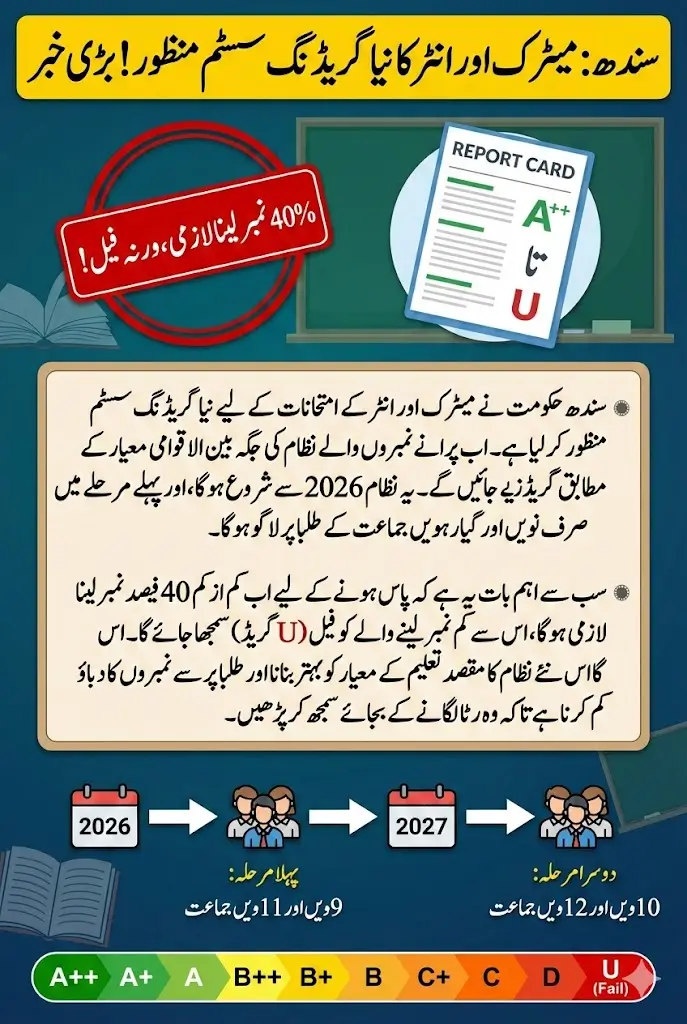
The new grading system is part of Sindh’s ongoing education reforms aimed at enhancing transparency, ensuring fair assessment, and promoting consistency across educational boards. With this system, students’ performance will be categorized into clearly defined grades, helping universities, employers, and academic institutions better understand academic achievements.
Also Read: How to Apply For Zarkhez-e Asaan Digital Zarai Qarza 2026 Online: Step-by-Step Guide
Implementation Timeline for the New Grading System
The new grading system will be implemented in phases across Sindh to ensure smooth transition and minimal disruption to students and educational boards.
- The first implementation will take place in 2026 for students appearing in the first-year examinations of Matric (SSC-I) and Intermediate (HSSC-I)
- From 2027 onward, the system will also be applied to the second-year examinations of Matric (SSC-II) and Intermediate (HSSC-II)
- Provincial educational authorities will provide guidance and training to examiners and administrators to ensure consistency in grading
- The Inter-Board Coordination Committee (IBCC) at the federal level has endorsed this new framework to maintain alignment with national education policies
This phased rollout ensures that all students, educators, and examination boards can adapt to the new system without confusion or administrative delays.
Grading Scale and Performance Criteria
The new grading system classifies student performance into specific grades, replacing numerical marks with a more transparent evaluation standard.
| Grade | Percentage Range | Interpretation |
|---|---|---|
| A++ | 96–100% | Outstanding |
| A+ | 91–95% | Excellent |
| A | 86–90% | Very Good |
| B++ | 81–85% | Good |
| B+ | 76–80% | Above Average |
| B | 71–75% | Average |
| C+ | 61–70% | Satisfactory |
| C | 51–60% | Pass |
| D | 40–50% | Minimal Passing |
| U | Below 40% | Fail / Under Grade |
This grading scale ensures clarity in performance evaluation, reducing ambiguity associated with traditional numerical marks. Students, parents, and institutions will have a clear understanding of academic standards.
Also Read: BISP 8171 Good News 2026: Rs. 13500 Payment Started Via Bank Alfalah ATMs
Benefits of the New Grading System
The new grading system offers multiple advantages for students, educators, and educational institutions across Sindh.
- Simplifies evaluation by categorizing performance into defined grades
- Aligns local education standards with international practices
- Helps universities and employers assess student competencies more effectively
- Reduces stress on students by focusing on performance categories rather than individual marks
- Encourages a more holistic approach to learning and assessment
By implementing this grading system, Sindh aims to improve overall academic quality, promote transparency, and ensure that students are assessed fairly and consistently across all boards.
The system also aims to support better decision-making by educational institutions and policymakers.
Key Considerations for Students
Students should familiarize themselves with the new grading policy to understand its implications on their academic results and future opportunities.
- Students scoring below 40 percent will need to retake the exams to meet passing requirements
- Students achieving grades D and above are considered to have passed, but higher grades provide more opportunities for higher education
- The transition to the new grading system does not affect students’ eligibility for scholarships or university admissions, provided they meet the grade criteria
- Parents and guardians should guide students in understanding their grades and planning for improvements in future exams
- Educators will provide additional support to students to adapt to the grading changes
Understanding these points will help students prepare strategically and make informed decisions about their academic future. Teachers and parents play a key role in helping students adapt to this new system.
Also Read: BISP 8171 January 2026 Payment Schedule Has Been Announced For Old and New Beneficiaries
Comparison Between Old and New System
Before the implementation of the grading system, students were assessed purely on numerical marks, which often led to confusion and inconsistencies.
- Old system focused solely on percentage scores
- New system emphasizes grades, which correspond to defined percentage ranges
- U grade replaces failure marking below 40 percent, making it clear who has failed
- Grades provide a standardized method for interpreting performance across different boards
This approach ensures a uniform understanding of student achievement and allows for easier comparison between different schools and boards.
Impact on Matric and Intermediate Students
The new grading system will significantly impact students appearing in the 2026 exams and beyond.
- First-year Matric (SSC-I) and Intermediate (HSSC-I) students will be the first to experience the new grading framework
- Second-year students will follow in 2027, ensuring a phased and manageable transition
- Students previously used to marks-based evaluation will need guidance to understand grade thresholds
- Examination boards will provide sample grading charts and mock evaluations to help students adjust
This approach ensures students are not disadvantaged by sudden changes and can plan their preparation accordingly. It also encourages students to focus on overall learning rather than just numerical marks.
Also Read: NADRA Announces Multiple Job Openings 2026 Across Islamabad, AJK, Gilgit Baltistan, and Gwadar
Steps for Students to Adapt
Students can take practical steps to adjust to the new grading system:
- Understand the percentage-to-grade mapping and plan study goals accordingly
- Focus on improving weak subjects to move from lower to higher grade categories
- Seek help from teachers and tutors to clarify grading expectations
- Use past papers and practice exams to monitor progress and estimate potential grades
- Stay informed about updates from examination boards regarding grading policies
Following these steps will help students maximize their performance under the new grading system.
Proactive preparation and awareness of grading criteria are key to academic success.
FAQs
When will the new grading system be implemented?
The new system starts from 2026 for first-year SSC and HSSC students.
What happens if a student scores below 40 percent?
They will be graded U and considered fail, requiring a retake of the exam.
Will the grading system affect university admissions?
No, students with passing grades can apply, but higher grades improve prospects.
Are teachers provided guidance on the new grading system?
Yes, educational authorities will train teachers and examiners for consistent evaluation.
Can students use old marks for comparison?
Old marks will still be recorded for reference, but grades will be used for official evaluation.
Also Read: Turkey Announces Scholarships for Azad Kashmir Students in 2026
Conclusion
The approval of the new grading system in Sindh marks a significant step toward modernizing education and aligning it with international standards. By categorizing performance into clear grades, students, parents, and educational institutions can better understand academic achievement and progress.
This reform ensures transparency, reduces ambiguity, and encourages a holistic approach to learning. With phased implementation starting from 2026, students will have the guidance and time needed to adapt, making the transition smooth and beneficial for long-term educational outcomes.
(Source: City42.tv)