
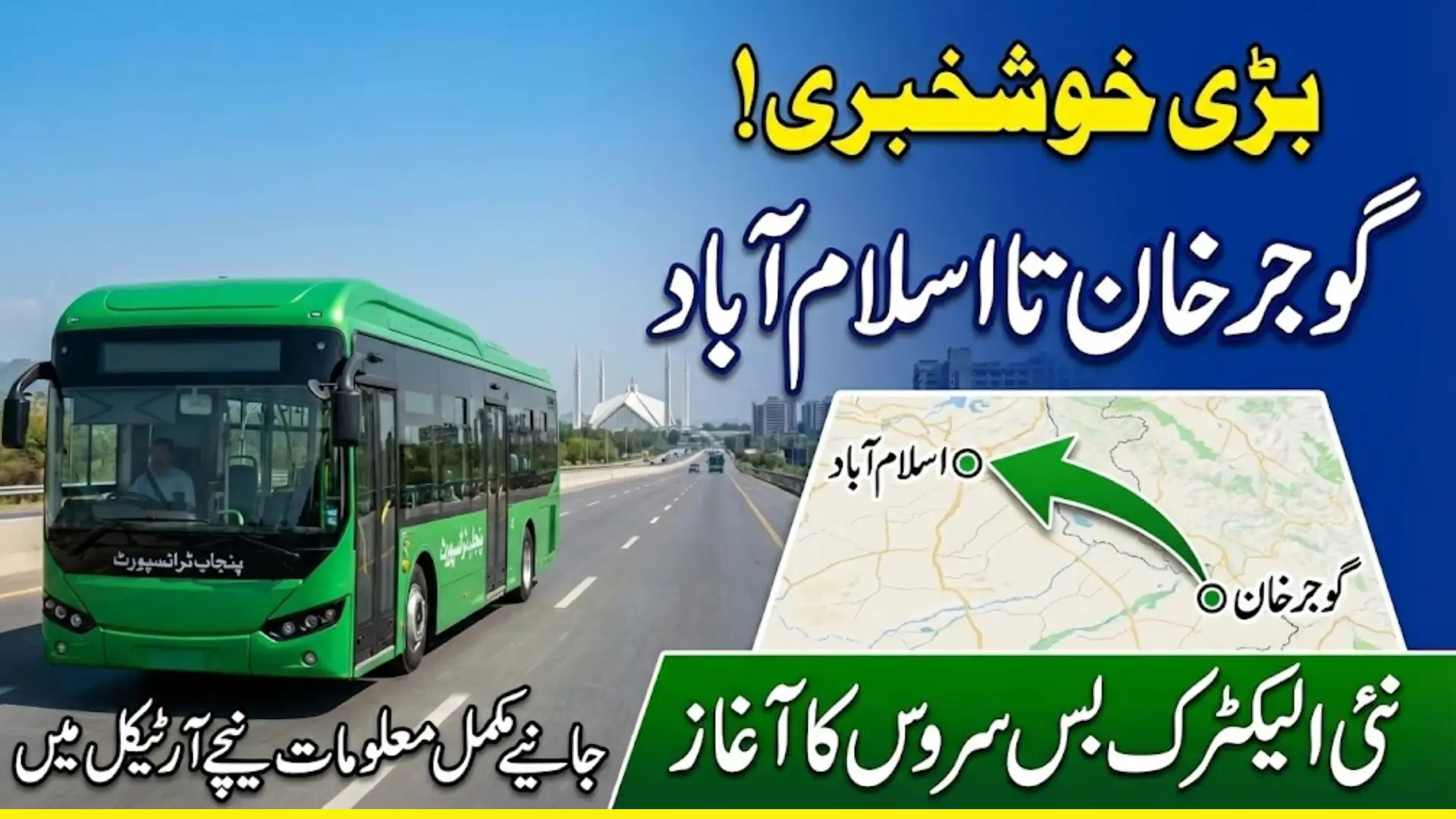
Punjab Expands Electric Bus Network with New Routes
Punjab Expands Electric Bus Network with New Routes: The Punjab government has taken another major step toward improving public transport and reducing environmental pollution by expanding its electric bus network. A new route connecting Gujar Khan with Rawalpindi and Islamabad has been approved, marking an important development for daily commuters and intercity travelers. This initiative reflects the government’s long-term vision to modernize transport infrastructure and provide affordable, eco-friendly travel options.
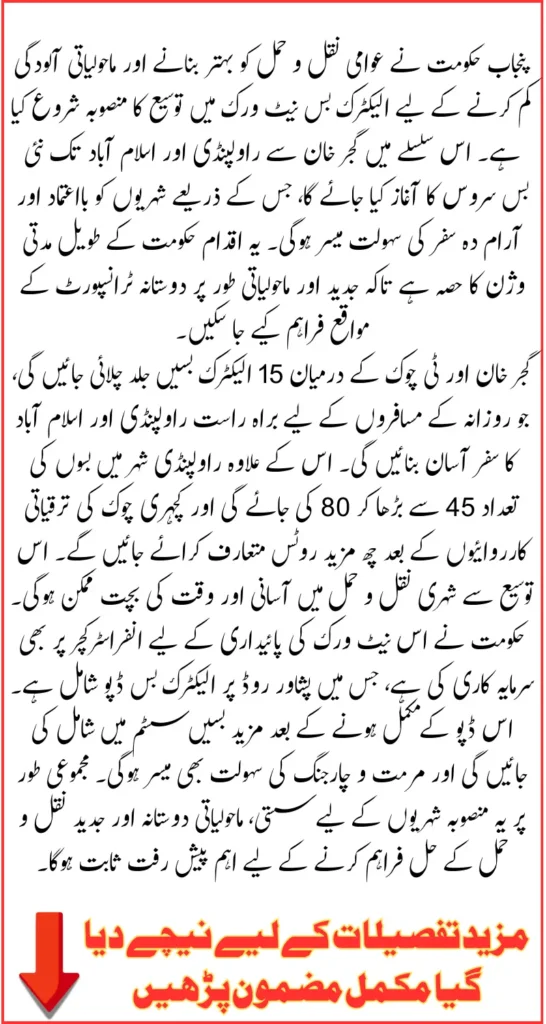
Under this expansion plan, electric buses will soon operate between Gujar Khan and T-Chowk, offering a smooth and reliable connection to Rawalpindi and Islamabad. Alongside this route, the government is also increasing the number of electric buses within Rawalpindi city and preparing additional routes that will become operational after ongoing road development projects are completed.
Punjab’s Vision for Sustainable Public Transport
Punjab’s electric bus project is part of a broader strategy to promote sustainable urban mobility. With increasing traffic congestion and air pollution in major cities, the government has been focusing on clean energy transport solutions that can serve large populations efficiently.
Electric buses are seen as a practical alternative to traditional fuel-based vehicles. They reduce carbon emissions, lower fuel costs, and offer quieter and more comfortable travel for passengers. By expanding routes beyond city centers, the government aims to ensure that suburban and semi-urban areas also benefit from modern transport services.
- Focus on reducing air pollution in urban areas
- Promotion of eco-friendly transport solutions
- Expansion of modern public transport beyond city limits
- Improved travel experience for daily commuters
This vision sets the foundation for long-term improvements in Punjab’s transport system.
Also Read: Massive New Year 2026 Gift! Petrol Prices Set To Drop By Rs. 11 Per Litre
New Electric Bus Route from Gujar Khan to Islamabad
One of the most significant developments is the approval of a new electric bus route connecting Gujar Khan with Rawalpindi and Islamabad. According to the Regional Transport Authority, 15 electric buses will begin operating on this route starting next month.
The route will start from Gujar Khan Adda and travel to T-Chowk via Mandra, using the G.T. Road. From T-Chowk, buses will return to Gujar Khan along the same route. This service will provide a direct and reliable link for residents who regularly commute for work, education, or healthcare.
- Route approved by Regional Transport Authority
- 15 electric buses allocated initially
- Travel via G.T. Road through Mandra
- Direct connection to Rawalpindi and Islamabad
This new route is expected to reduce travel time and dependence on private transport.
Benefits for Gujar Khan and Surrounding Areas
Residents of Gujar Khan and nearby localities have long faced challenges due to limited public transport options. The introduction of electric buses will significantly improve accessibility and mobility for these communities.
Affordable fares and regular schedules will make daily commuting easier for students, office workers, and small business owners. The new service is also expected to boost local economic activity by improving access to major urban centers.
- Easier access to Rawalpindi and Islamabad
- Reduced travel costs for daily commuters
- Improved connectivity for education and employment
- Positive impact on local businesses
Overall, the route is likely to enhance the quality of life for residents in the region.
Also Read: XPENG G6 And X9 Electric Vehicle Prices Officially Announced In Pakistan With Booking Details
Expansion of Electric Bus Services in Rawalpindi City
In addition to the Gujar Khan route, the Punjab government is expanding electric bus services within Rawalpindi city. The number of electric buses operating in the city will increase from 45 to 80 over the next few months.
This expansion will take place after the remodeling of Kutchery Chowk, a key traffic point in Rawalpindi. Once the development work is completed, six additional routes will become operational, further improving coverage across the city.
- Increase from 45 to 80 electric buses
- Expansion planned after Kutchery Chowk remodeling
- Six new routes to be launched
- Better coverage across Rawalpindi
This growth reflects strong demand for electric bus services in urban areas.
Infrastructure Development and Bus Depot on Peshawar Road
To support the growing electric bus fleet, the government is also investing in infrastructure development. An electric bus depot is currently under construction on Peshawar Road and is expected to be completed soon.
Once operational, the depot will allow the addition of more buses to the system and ensure proper maintenance and charging facilities. This infrastructure is essential for the smooth and long-term operation of electric buses.
- Electric bus depot under construction
- Location on Peshawar Road
- Charging and maintenance facilities
- Support for future fleet expansion
Strong infrastructure will play a key role in sustaining the electric bus network.
Also Read: Allama Iqbal Open University Opens Admissions For Spring 2026 Nationwide Online
Electric Bus Routes and Expansion Plan
The current and planned electric bus network expansion is given below
| Area | Current Status | Planned Expansion |
|---|---|---|
| Rawalpindi City | 45 buses operating on multiple routes | Increase to 80 buses with 6 additional routes |
| Gujar Khan Route | Newly approved route | 15 electric buses starting next month |
| Total Routes | 4 routes currently operational | Expansion to 10 routes after development work |
This structured plan helps ensure organized growth and efficient service delivery.
Environmental and Economic Impact
The expansion of electric buses is expected to bring both environmental and economic benefits. Reduced emissions will contribute to better air quality, while lower operating costs can help keep fares affordable for passengers.
Electric buses also reduce reliance on imported fuel, supporting economic stability. Over time, these savings can be redirected toward further improvements in public transport infrastructure.
- Reduction in air and noise pollution
- Lower fuel and maintenance costs
- Affordable fares for passengers
- Reduced dependence on fossil fuels
These benefits highlight the long-term value of investing in electric transport.
Also Read: Khyber Pakhtunkhwa Government Launches Recruitment For 2800 Chowkidar Jobs In Govt Schools
Challenges and Future Outlook
Despite the positive outlook, some challenges remain. Road development delays, power supply management, and public awareness are factors that can affect smooth implementation. However, government planning and phased expansion aim to address these issues.
Looking ahead to 2026, Punjab’s electric bus network is expected to play a major role in shaping sustainable urban transport. Continued investment and efficient management will be key to its success.
- Need for timely completion of road projects
- Ensuring reliable power supply
- Public awareness and usage
- Long-term planning and monitoring
With consistent efforts, these challenges can be effectively managed.
| Topic | Key Details |
|---|---|
| Government Initiative | Punjab government expanding electric bus network to improve public transport and reduce environmental pollution. |
| New Route | Gujar Khan to T-Chowk, connecting Rawalpindi and Islamabad, with 15 electric buses starting next month. |
| Route Details | Start from Gujar Khan Adda → Mandra → T-Chowk → return to Gujar Khan via G.T. Road. |
| Benefits for Commuters | Direct, reliable, and eco-friendly travel; reduced travel time; affordable fares; improved connectivity for work, education, and healthcare. |
| Rawalpindi City Expansion | Number of buses increasing from 45 to 80; six additional routes to be launched after Kutchery Chowk redevelopment. |
| Infrastructure Development | Electric bus depot under construction on Peshawar Road for maintenance and charging; supports future fleet expansion. |
| Total Routes | Currently 4 operational routes; 10 routes planned after completion of road development and depot. |
| Environmental Impact | Reduced air and noise pollution; lower fuel consumption; decreased dependence on fossil fuels. |
| Economic Impact | Lower operating costs, affordable fares, savings can be reinvested into public transport infrastructure. |
| Challenges | Road development delays, power supply management, public awareness, and smooth implementation require monitoring. |
| Long-Term Outlook | Improved urban mobility, stronger public transport system, sustainable and eco-friendly travel options. |
| Expected Launch Timeline | Gujar Khan route starts next month; Rawalpindi city bus expansion phased after road and depot development. |
Conclusion
The expansion of the electric bus network linking Gujar Khan with Rawalpindi and Islamabad represents a major milestone in Punjab’s public transport development. By improving connectivity and promoting clean energy transport, the government is addressing both commuter needs and environmental concerns.
As more routes and buses become operational in 2026, the electric bus system is expected to transform daily travel across the region. This initiative has the potential to set an example for sustainable transport planning in other provinces as well.
Also Read: Only 3 Days Left For Booking Your Honda Bike With 0% Profit on Installments by Faysal Bank
Frequently Asked Questions
When will the Gujar Khan electric bus route start?
The route is expected to begin operations next month with 15 electric buses.
Which areas will the new route connect?
It will connect Gujar Khan with Rawalpindi and Islamabad via G.T. Road and Mandra.
How many electric buses will operate in Rawalpindi city?
The number will increase from 45 to 80 in the coming months.
What infrastructure is being developed for electric buses?
An electric bus depot is under construction on Peshawar Road for charging and maintenance.
Why is Punjab focusing on electric buses?
Electric buses help reduce pollution, lower costs, and provide sustainable public transport options.