

Petrol Prices Set To Drop By Rs. 11 Per Litre
Petrol Prices Set To Drop By Rs. 11 Per Litre: The beginning of the New Year 2026 is expected to bring major relief for people across the country as petroleum product prices are likely to see a significant reduction. According to initial assessments and media reports, petrol prices may drop by nearly Rs. 11 per litre, offering much-needed comfort to households already dealing with high living costs.
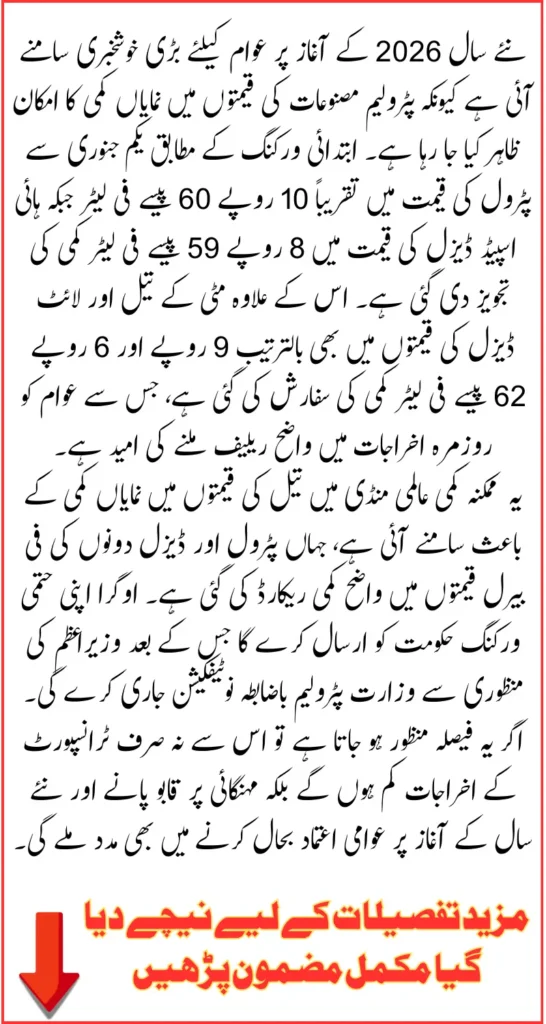
This expected reduction is based on early working completed for the next 15-day pricing cycle. Sources indicate that falling global oil prices have created space for the government to consider lowering fuel rates. If approved, this decision could positively impact transportation costs, inflation, and overall economic sentiment at the start of the new year.
Expected Reduction in Petrol Prices from January 1, 2026
The most discussed relief is related to petrol prices, which are expected to decline by around Rs. 10.60 per litre. This proposal is part of preliminary calculations prepared by relevant authorities for the upcoming price review period.
If implemented, this reduction will directly benefit millions of consumers who rely on petrol for daily commuting and business activities. A decrease of this scale can reduce monthly fuel expenses and slightly ease pressure on household budgets.
- Proposed petrol price cut of Rs. 10.60 per litre
- Expected implementation date from January 1, 2026
- Based on early price working for next 15 days
This proposed petrol price cut is being viewed as a positive step toward providing immediate relief at the start of the new year.
Possible Decrease in High-Speed Diesel Prices
High-speed diesel is also expected to become cheaper, with a proposed reduction of Rs. 8.59 per litre. Diesel prices are especially important because they directly affect transport, agriculture, and industrial sectors. Lower diesel prices could help reduce freight charges and agricultural input costs. This may eventually support price stability for essential goods across the country.
- Suggested diesel price reduction of Rs. 8.59 per litre
- Relief for transporters, farmers, and industries
- Potential indirect impact on food and commodity prices
The expected diesel price cut could play a key role in controlling inflationary pressures in early 2026.
Also Read: XPENG G6 And X9 Electric Vehicle Prices Officially Announced In Pakistan With Booking Details
Kerosene and Light Diesel Oil Price Proposals
Apart from petrol and diesel, other petroleum products are also under review. Reports suggest that kerosene oil prices may decrease by Rs. 9 per litre, while light diesel oil could see a reduction of Rs. 6.62 per litre. These products are often used in rural and low-income areas, so any price relief can provide direct support to vulnerable segments of society.
- Kerosene oil price cut proposal of Rs. 9 per litre
- Light diesel oil expected to be cheaper by Rs. 6.62 per litre
- Aimed at easing fuel costs in rural regions
These reductions could improve energy affordability for households that still depend on alternative fuel sources.
Role of OGRA and Government Approval Process
The Oil and Gas Regulatory Authority is expected to forward its working paper to the government after completing detailed calculations. This paper will include recommended prices based on international trends and domestic factors. Once received, the government will review revenue requirements before making a final decision. Approval from the Prime Minister is mandatory, and the official notification will be issued by the Ministry of Petroleum.
- OGRA to submit working paper to the government
- Final decision depends on revenue considerations
- Prime Minister’s approval required before notification
This process ensures that price changes balance consumer relief with fiscal responsibilities.
Also Read: Allama Iqbal Open University Opens Admissions For Spring 2026 Nationwide Online
Impact of Global Oil Market Trends
The primary reason behind the expected fuel price cut is the recent decline in global oil prices. International petrol prices have dropped significantly, creating room for domestic price adjustments.
Petrol prices in the global market have fallen from over 75 dollars per barrel to around 69.73 dollars per barrel. Similarly, diesel prices have also declined sharply during the same period.
- Global petrol price dropped by over 5 dollars per barrel
- Diesel prices reduced by around 4.35 dollars per barrel
- International market trends favor local price cuts
These global changes have directly influenced local price calculations.
Current Global Fuel Price Snapshot
Below is a simple overview of recent global fuel price movements that influenced the proposed reductions.
| Fuel Type | Previous Price Per Barrel | Current Price Per Barrel | Change |
|---|---|---|---|
| Petrol | 75.05 USD | 69.73 USD | -5.32 USD |
| Diesel | 84.27 USD | 79.92 USD | -4.35 USD |
This comparison highlights how international market shifts are driving expected domestic relief.
Premium Changes and Their Effect
Although petrol prices have dropped globally, the premium on petrol imports has increased slightly. The premium rose by 38 cents per barrel, reaching around 5.14 dollars per barrel.
Despite this increase, the overall decline in base oil prices remains strong enough to support a reduction in local fuel prices.
- Petrol premium increased by 38 cents per barrel
- Overall impact still supports price reduction
- Net benefit expected for consumers
This shows that base price trends matter more than minor premium fluctuations.
Also Read: Khyber Pakhtunkhwa Government Launches Recruitment For 2800 Chowkidar Jobs In Govt Schools
Economic Impact of Fuel Price Reduction
A reduction in fuel prices often has a ripple effect across the economy. Lower fuel costs can reduce transportation expenses, which may gradually bring down prices of essential goods.
This relief at the start of 2026 could improve consumer confidence and provide some breathing space to businesses facing high operational costs.
- Reduced transport and logistics costs
- Possible moderation in inflation
- Improved public sentiment at New Year
Such impacts make fuel price adjustments highly significant for the overall economy.
Public Expectations and Market Response
People are closely watching the government’s final decision, especially given the economic pressures of the past year. A confirmed price cut could be seen as a positive New Year gesture.
Markets and businesses are also likely to adjust their pricing strategies once the official notification is issued.
- Strong public expectation of relief
- Businesses anticipating lower fuel expenses
- Positive start to the new year if approved
This anticipation reflects the importance of fuel prices in daily life.
Also Read: Only 3 Days Left For Booking Your Honda Bike With 0% Profit on Installments by Faysal Bank
Final Outlook for New Year 2026
If approved, this fuel price reduction could be one of the most notable New Year relief measures in recent times. It would provide immediate benefits to consumers and support economic stability. However, the final decision will depend on government approval and revenue considerations, which will become clear in the coming days.
The expected cut signals a hopeful beginning to 2026, especially for those struggling with rising costs. It also reflects how global market movements can directly impact local living conditions. If implemented, this step could set a positive tone for economic decisions in the year ahead.
Frequently Asked Questions
Will petrol prices really drop by Rs. 11 per litre?
Yes, early working suggests a reduction of around Rs. 10.60 per litre, subject to final approval.
When will the new fuel prices be announced?
The announcement is expected around January 1, 2026, after government approval.
Will diesel prices also be reduced?
Yes, high-speed diesel prices may decrease by about Rs. 8.59 per litre.
Why are fuel prices going down now?
The main reason is a significant drop in global oil prices over recent weeks.
Is this price cut guaranteed?
No, it depends on final government approval and revenue considerations.