
Petrol Price Expected To Drop Again On 16 January
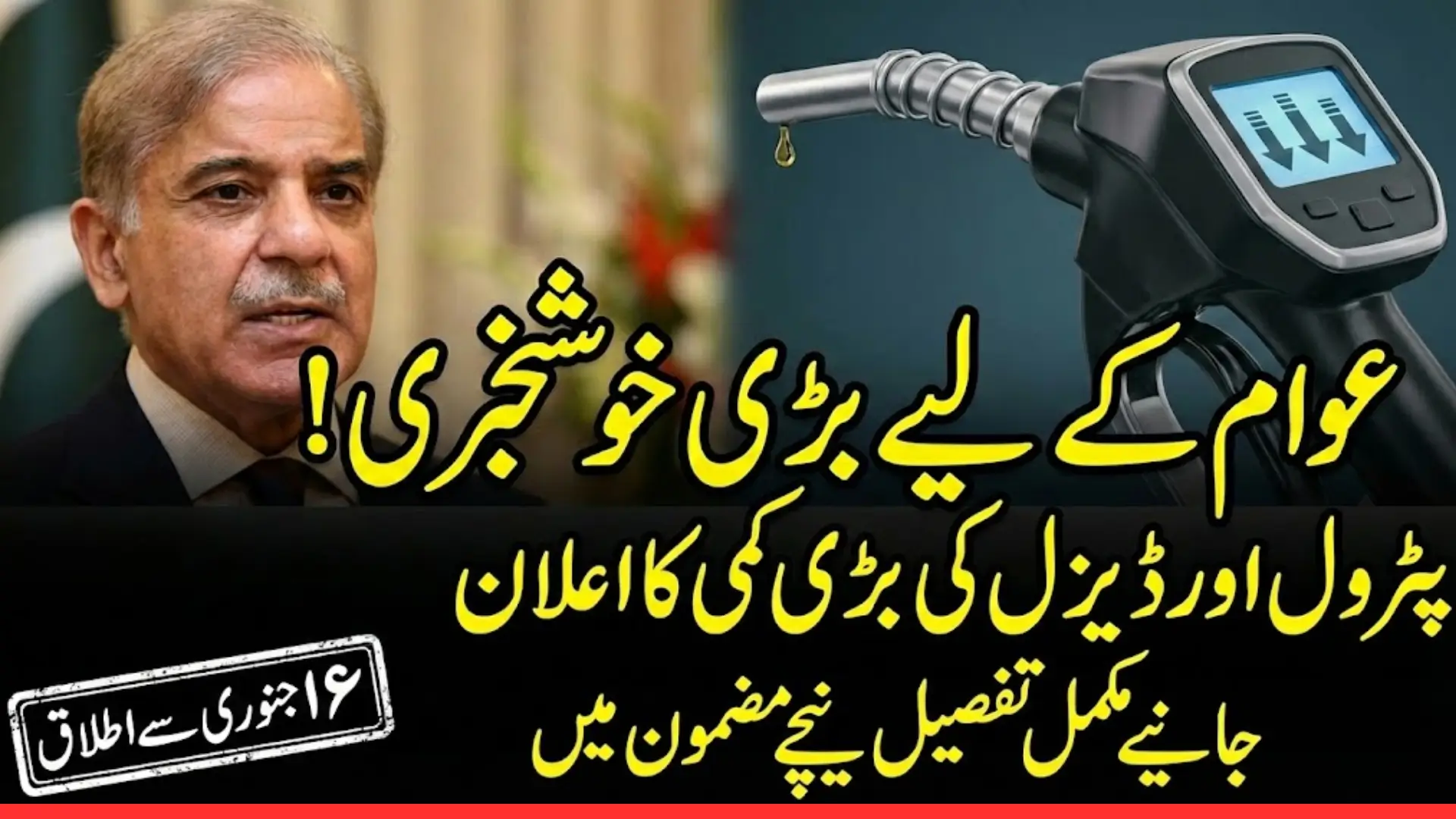
Petrol Price Expected To Drop Again On 16 January: Consumers in Pakistan are set to receive further relief at the pump as petroleum product prices are expected to be reduced again starting January 16, 2026. This follows a significant price cut at the beginning of the new year, offering much-needed financial respite to the public. The proposed price revision is part of a broader review of global oil trends and domestic economic indicators by the federal government.
The final approval for the new pricing will come from Prime Minister Muhammad Shehbaz Sharif, according to official sources. If approved, the reduction will directly affect petrol, high-speed diesel, kerosene oil, and light diesel oil, easing fuel-related expenses for households, transport operators, and businesses alike.
Also Read: Balochistan Launches Electric Bike Scheme and Health Insurance Initiative for Public Welfare in 2026
Overview of the Proposed Price Reduction
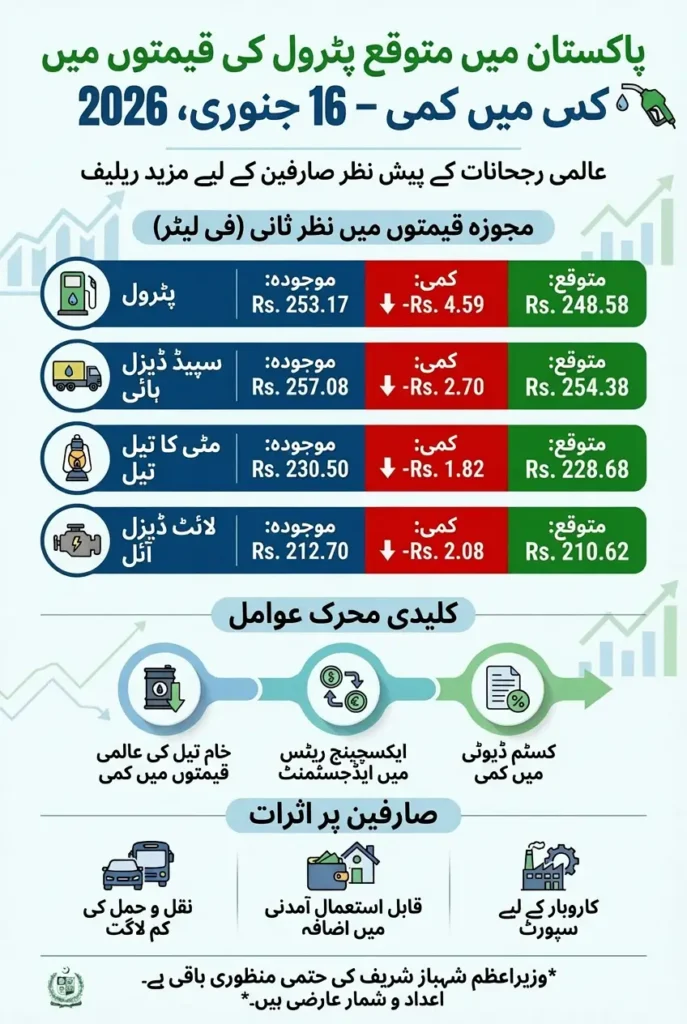
The government has proposed a reduction of petroleum prices to extend relief to consumers. Petrol prices are expected to drop by Rs. 4.59 per litre, while high-speed diesel may see a decline of Rs. 2.70 per litre. Kerosene oil prices could fall by Rs. 1.82 per litre, and light diesel oil might be reduced by Rs. 2.08 per litre.
This move comes after a significant cut on January 1, 2026, when petrol prices were slashed by Rs. 10.28 per litre for the first half of the year. During that revision, petrol prices fell from Rs. 263.45 to Rs. 253.17 per litre, and high-speed diesel prices dropped by Rs. 8.57 per litre to Rs. 257.08. The repeated price cut is aimed at keeping the public buoyed amid economic pressures and fluctuating global oil rates.
Key Factors Behind the Price Revision
The decision to reduce prices again is influenced by several international and domestic factors. Officials have stated that recent declines in global oil prices, adjustments in customs duties, and exchange rate fluctuations contributed to the projected drop in ex-refinery prices.
- Lower international crude oil rates
- Reduction in petrol premium and shipping charges
- Adjustments in exchange rates affecting import costs
- Government measures to reduce customs duty on petroleum products
- Monitoring of domestic fuel demand and affordability
These factors combined provide the federal government with the basis for adjusting petroleum prices in favor of consumers.
Also Read: BISP 8171 Qist Check Online 2026 – Easy And Complete Guide To Verify Your Status Instantly
Detailed Breakdown of Expected Reductions
The expected price cuts for petroleum products have been calculated based on ex-refinery prices, global oil trends, and domestic market indicators.
- Petrol: Rs. 4.59 per litre decrease
- High-speed diesel: Rs. 2.70 per litre decrease
- Kerosene oil: Rs. 1.82 per litre decrease
- Light diesel oil: Rs. 2.08 per litre decrease
Petrol and Diesel Price Revision Overview
Officials emphasize that these figures are tentative and will be finalized only after approval from the Prime Minister.
| Petroleum Product | Price Reduction (Rs per litre) | Current Price (Rs per litre) | Expected Price (Rs per litre) |
|---|---|---|---|
| Petrol | 4.59 | 253.17 | 248.58 |
| High-Speed Diesel | 2.70 | 257.08 | 254.38 |
| Kerosene Oil | 1.82 | 230.50 | 228.68 |
| Light Diesel Oil | 2.08 | 212.70 | 210.62 |
This provides a clear summary of the expected changes in fuel prices for quick reference.
Also Read: Government of Punjab Official Notification: Winter Holidays Extended from January 12 to January 19,
Impact of the Price Reduction on Consumers
The proposed price cut is expected to offer relief to both households and businesses across Pakistan. Petrol is a primary fuel for transport and commercial operations, and any reduction translates directly to lower transportation costs and daily expenses.
- Reduced cost of transportation for private vehicles and public transport
- Lower operating costs for logistics and goods transport companies
- Decreased household fuel expenses for cooking and heating in some regions
- Support for small businesses relying on diesel-powered equipment
- Improved affordability for the general public amid inflationary pressures
These reductions are especially welcome following the significant January 1 cut, allowing families to save more on fuel expenditures.
Global Oil Market Trends
Global oil prices have recently shown a downward trajectory. On January 11, 2026, the international price of petrol fell by $2.74 per barrel, decreasing from $69.27 to $66.54 per barrel. Additionally, the petrol premium dropped slightly by $0.13 per barrel to $5.01.
- Steady decline in global crude oil prices
- Minimal increase in shipping and logistics costs for oil imports
- Stable international trade conditions reducing petroleum import expenses
Monitoring these trends allows the government to adjust domestic fuel prices proactively to align with international market conditions.
Also Read: Punjab Winter Vacations 2026: Extension Confirmed Or Fake News? Official Clarification Inside
Government Measures Supporting the Reduction
The federal government has implemented several policies to ensure consumers benefit from international price decreases. Ex-refinery price reductions and exchange rate adjustments are among the measures applied to the calculation of domestic fuel prices.
- Ex-refinery price reduction by Rs. 6.51 per litre for petrol
- Exchange rate adjustments contributing a further Rs. 0.68 per litre decrease
- Review of domestic economic indicators to balance affordability and fiscal needs
These measures aim to maintain consumer relief while keeping the petroleum sector financially stable.
Consumer Guidance on Fuel Price Changes
Consumers are advised to follow official announcements regarding the price revision. Only after final approval by Prime Minister Shehbaz Sharif will the new prices be implemented. Until then, the prices announced are subject to confirmation.
- Monitor official notifications for confirmed price changes
- Fuel stations will implement new prices after formal announcement
- Budget and transportation planning should consider the revised rates
- Public transport operators should adjust fares if required
By staying informed, consumers can plan accordingly for the upcoming price change.
Economic and Social Implications
The expected fuel price reduction can have several positive impacts on the economy and society. Lower petroleum costs reduce inflationary pressures, improve consumer purchasing power, and support small and medium businesses.
Expected impacts include:
- Lower inflation due to reduced transportation and commodity costs
- Increased disposable income for households
- Support for industrial and agricultural sectors reliant on diesel
- Enhanced public confidence in government economic measures
These measures indicate a proactive approach to supporting consumers while aligning with global oil market trends.
Conclusion
The expected petrol price reduction on 16 January in Pakistan is welcome news for consumers across the country. Following the major January 1 price cut, this additional reduction demonstrates the government’s commitment to managing fuel costs in line with global market conditions.
With petrol prices potentially decreasing by Rs. 4.59 per litre and similar reductions across other petroleum products, households and businesses are likely to benefit significantly. The final prices will be confirmed after approval from Prime Minister Shehbaz Sharif. This move highlights the impact of international market trends on domestic fuel pricing and the government’s efforts to extend relief to consumers during times of economic pressures.
Also Read: National IT Board Announces Smart Islamabad Project Jobs 2026
FAQs
What is the expected date for the petrol price reduction?
The reduction is expected to take effect from 16 January 2026.
How much is petrol expected to decrease?
Petrol prices may drop by Rs. 4.59 per litre.
Will high-speed diesel also see a reduction?
Yes, high-speed diesel is expected to fall by Rs. 2.70 per litre.
What factors contributed to this price reduction?
Lower global oil prices, reduced customs duty, and exchange rate adjustments are the main reasons.
Who will approve the final price revision?
Prime Minister Muhammad Shehbaz Sharif will give the final approval for the new prices.