
Sehat Sahulat Health Card
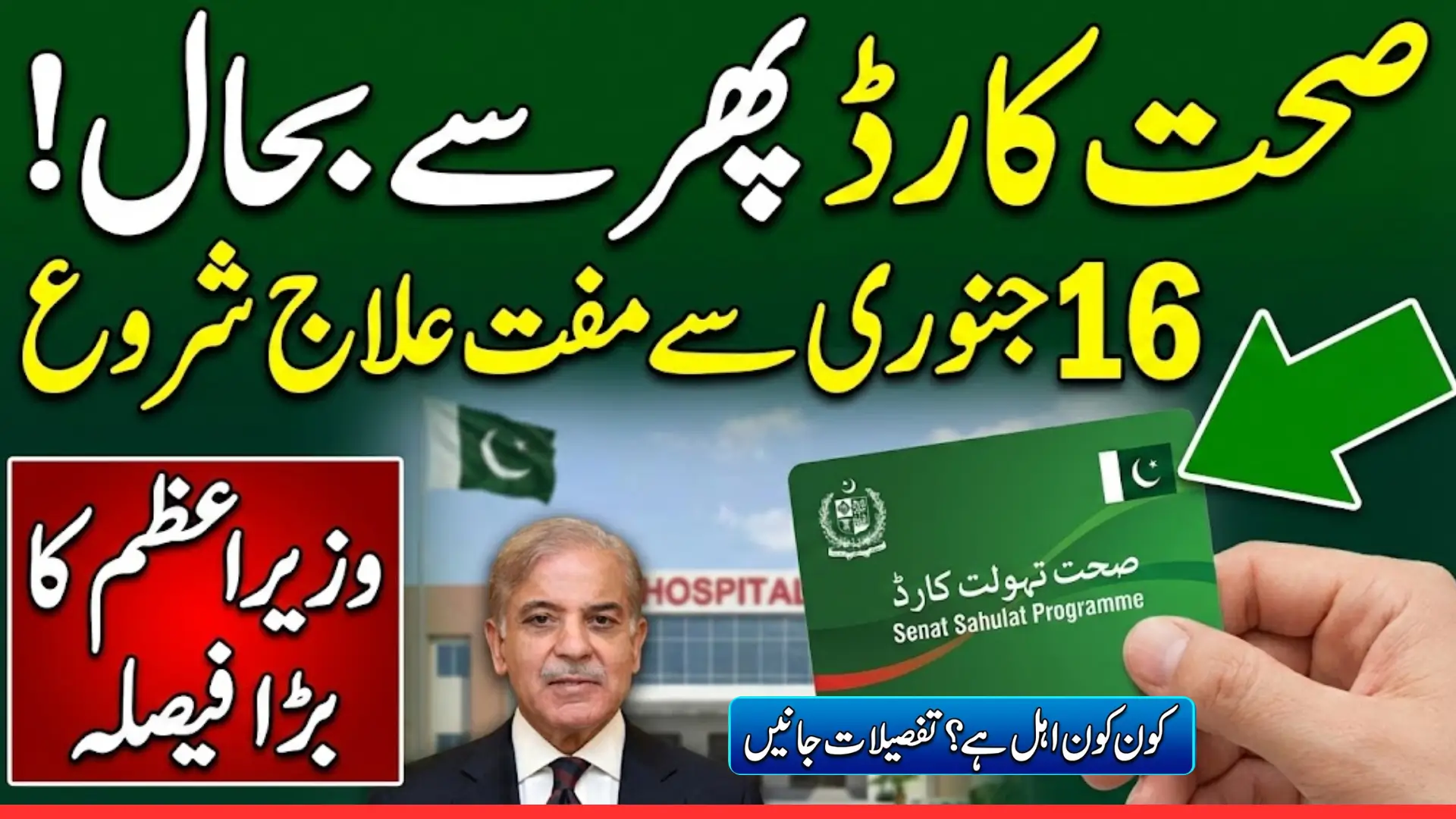
The federal government has announced the restoration of the Sehat Sahulat Health Card facility for millions of residents across Pakistan. This initiative will resume from January 16, benefiting over 10 million families in Islamabad, Azad Jammu and Kashmir, KPK, Gilgit-Baltistan, and Punjab. The restoration comes after a temporary suspension of the program in March 2024 due to unpaid dues, which had left many families without access to free healthcare services. The Prime Minister has given clear instructions to ensure uninterrupted operations of the program in the affected regions.
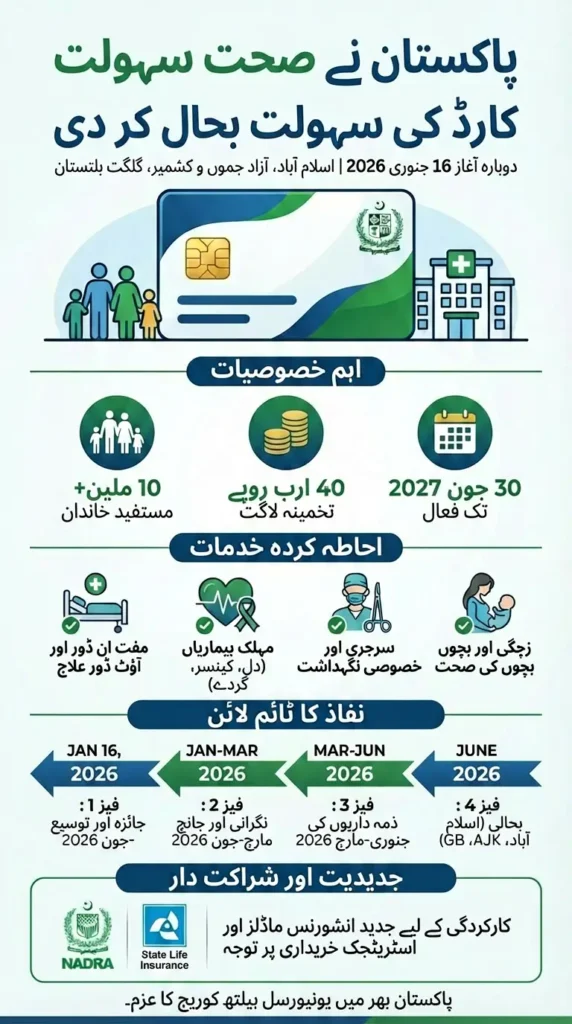
The decision was approved by the National Steering Committee of the Sehat Sahulat Programme, chaired by Federal Health Minister Syed Mustafa Kamal. With an estimated cost of Rs. 40 billion, the revised PC-I for the program is now set to remain in effect until June 30, 2027. This restoration emphasizes the government’s focus on universal health coverage and modern health insurance models to improve healthcare efficiency across the country.
Also Read: Rescue 1122 EMT Internship Programme 2026 In Punjab – Eligibility, Stipend, And Application Process
Overview of Sehat Sahulat Programme Restoration
The Sehat Sahulat Programme is Pakistan’s flagship health insurance initiative, aimed at providing free healthcare services to low-income families. Its restoration highlights the government’s commitment to universal health coverage and modernizing healthcare delivery in the country.
The committee meeting included key officials such as Health Secretary Hamid Yaqoob, Special Secretary Health, and CEO of the Sehat Sahulat Programme, Arshad Khan. During the meeting, progress on restoring services and addressing outstanding issues was reviewed, ensuring that no delays will affect the launch of the program on January 16.
Key Highlights of the Restoration Plan
Before diving into the details, here are the main points about the restored Sehat Sahulat Health Card program:
- The facility will be restored for over 10 million families in Islamabad, Azad Jammu and Kashmir, and Gilgit-Baltistan.
- Services will resume from January 16, 2026.
- The revised PC-I for the program has an estimated cost of Rs. 40 billion.
- Existing contracts with State Life Insurance Corporation and NADRA will be extended to ensure smooth operations.
- Outstanding liabilities will be cleared through the Public Sector Development Programme.
- The program will now focus on modern health insurance models and strategic purchasing instead of directly managing hospital services.
- The restored facility will remain operational until June 30, 2027.
This restoration is a significant step toward improving healthcare access in the regions that were previously affected.
Also Read: Good News! Petrol Price Expected To Drop Again On 16 January In Pakistan
Objectives of the Sehat Sahulat Health Card
The main goal of restoring the health card program is to provide universal healthcare access to citizens who need it the most. It aims to reduce financial burdens caused by medical expenses and ensure timely access to medical treatment.
Additionally, the program intends to:
- Enhance efficiency in healthcare delivery through insurance-based models.
- Promote preventive healthcare and timely medical interventions.
- Strengthen collaboration between hospitals, insurers, and government bodies.
- Provide equal healthcare opportunities across different regions of Pakistan.
The program ensures that low-income families can access quality medical services without worrying about out-of-pocket costs.
Services Covered Under the Program
The Sehat Sahulat Health Card provides a wide range of services to eligible families. The coverage includes emergency treatment, hospitalizations, surgeries, and specialized medical care.
Key services under the restored program include:
- Inpatient and outpatient treatment in recognized hospitals.
- Free treatment for critical illnesses such as heart disease, cancer, and kidney failure.
- Coverage for diagnostic tests and laboratory services.
- Maternal and child healthcare services, including delivery and immunization.
- Access to high-quality healthcare facilities across multiple regions.
These services ensure that families have comprehensive healthcare support when needed.
Funding and Financial Management
The restoration of the Sehat Sahulat Health Card involves careful financial planning to maintain sustainability. The government has approved an estimated budget of Rs. 40 billion for this program, which will be managed through the Public Sector Development Programme.
The financial structure includes:
- Payment of outstanding liabilities to hospitals and service providers.
- Extension of contracts with insurance partners like State Life Insurance Corporation.
- Collaboration with NADRA to manage beneficiary data efficiently.
- Regular audits and monitoring to ensure transparency and accountability.
This approach guarantees uninterrupted healthcare services while maintaining financial discipline and operational efficiency.
Also Read: Balochistan Launches Electric Bike Scheme and Health Insurance Initiative for Public Welfare in 2026
Implementation Timeline
The government has established a clear roadmap for the implementation of the restored Sehat Sahulat Health Card program. Services will be restored in a phased manner, starting from January 16, 2026.
| Phase | Activity | Timeline |
|---|---|---|
| Phase 1 | Restoration of services in Islamabad, AJK, and GB | January 16, 2026 |
| Phase 2 | Clearance of outstanding liabilities and payments to hospitals | January – March 2026 |
| Phase 3 | Monitoring and evaluation of service delivery | March – June 2026 |
| Phase 4 | Full program review and extension till June 30, 2027 | June 2026 |
This structured timeline ensures smooth resumption of healthcare services and uninterrupted operations.
Importance of Modern Health Insurance Models
The restoration plan emphasizes moving away from direct hospital management toward modern health insurance and strategic purchasing models. This approach ensures better service quality, efficiency, and accountability in healthcare delivery.
Benefits of modern insurance-based healthcare models include:
- Reduced administrative burden on government hospitals.
- Streamlined claim processing for beneficiaries.
- Improved patient satisfaction through faster access to treatment.
- Increased coverage for a larger population without compromising quality.
This model aligns with international best practices in healthcare management and ensures sustainable health service delivery.
Also Read: BISP 8171 Qist Check Online 2026 – Easy And Complete Guide To Verify Your Status Instantly
Role of Key Government Officials
The success of the restored program relies heavily on coordination among government officials and program administrators. Key roles include:
- Federal Health Minister Syed Mustafa Kamal – Strategic oversight and policy decisions.
- Health Secretary Hamid Yaqoob – Administrative management and coordination.
- Sehat Sahulat Programme CEO Arshad Khan – Operational implementation and monitoring.
- NADRA and State Life Insurance – Beneficiary management and insurance operations.
Together, these stakeholders ensure that the program is implemented efficiently, reaching millions of residents in need.
Benefits to Citizens
The restoration of the Sehat Sahulat Health Card program brings significant advantages for citizens in Islamabad, AJK, and Gilgit-Baltistan:
- Access to free medical treatment at designated hospitals.
- Financial relief from high medical expenses.
- Assurance of quality healthcare services for critical illnesses.
- Equal healthcare opportunities for marginalized communities.
- Peace of mind knowing that healthcare is accessible without delays.
These benefits improve the overall well-being of families and promote health security across the country.
Challenges and Solutions
While the restoration of the program is a positive step, certain challenges must be addressed to ensure smooth implementation:
- Challenge: Delays in clearing outstanding hospital liabilities.
Solution: Funds will be cleared through the Public Sector Development Programme. - Challenge: Coordination between multiple agencies.
Solution: Regular committee meetings and monitoring by key officials. - Challenge: Ensuring awareness among eligible families.
Solution: Nationwide awareness campaigns and community outreach programs.
These proactive measures are aimed at overcoming potential obstacles and ensuring uninterrupted healthcare services.
Also Read: Government of Punjab Official Notification: Winter Holidays Extended from January 12 to January 19
Future Plans and Sustainability
The Sehat Sahulat Programme aims to expand further and cover more citizens in the coming years. Future plans include:
- Introducing digital health cards for easier access and monitoring.
- Expanding coverage to additional regions across Pakistan.
- Strengthening partnerships with private hospitals and healthcare providers.
- Enhancing preventive healthcare and early diagnosis programs.
These initiatives ensure the long-term sustainability and effectiveness of the program in improving public health.
Conclusion
The federal government’s decision to restore the Sehat Sahulat Health Card program marks a significant step toward achieving universal health coverage in Pakistan. By resuming services from January 16, over 10 million families will regain access to essential medical services without financial burden. The program’s strategic focus on insurance-based models ensures efficiency, quality, and sustainability in healthcare delivery.
With proper implementation, effective monitoring, and financial management, the Sehat Sahulat Programme is set to improve healthcare access, protect vulnerable populations, and strengthen the overall health system of Pakistan.
Also Read: Punjab Winter Vacations 2026: Extension Confirmed Or Fake News? Official Clarification Inside
Frequently Asked Questions
When will the Sehat Sahulat Health Card services resume?
The program will resume from January 16, 2026, for residents of Islamabad, AJK, and Gilgit-Baltistan.
How many people will benefit from this restoration?
Over 10 million families across the affected regions will benefit from the restored services.
What is the estimated cost of the restored program?
The revised PC-I has an estimated budget of Rs. 40 billion.
Which organizations are involved in the implementation?
Key organizations include State Life Insurance, NADRA, and the Sehat Sahulat Programme administration.
Until when will the restored program remain operational?
The program is approved to operate until June 30, 2027, ensuring long-term coverage for citizens.