
Eligibility Requirements For Enrollment In the Benazir Nashunoma Program
The Benazir Nashunoma Program 2026 is a nationwide social welfare initiative aimed at improving maternal and child health in Pakistan. It specifically targets low-income families by providing nutritional support, financial aid, and medical assistance to pregnant women, breastfeeding mothers, and young children. The program works in conjunction with the Benazir Income Support Programme (BISP), ensuring that benefits reach only eligible families based on verified poverty data.
This article explains the eligibility criteria for the program, the enrollment process, the benefits provided, and key policies for beneficiaries. It also highlights why early childhood nutrition is critical and provides easy-to-follow instructions for applicants. By the end, readers will have a clear understanding of who can apply, how to register, and the kind of support they can expect from this program.
Also Read: BISP 8171 Begins Rs. 13500 Quarterly Installment Of October–December 339,000 Women In Rahim Yar Khan
Eligibility Criteria for Joining the Benazir Nashunoma Program 2026
The program is designed for families already registered under the Benazir Kafaalat Program, ensuring that support reaches households in genuine need. Eligibility is primarily based on the mother’s and child’s age and category, with a focus on vulnerable groups to maximize health outcomes.
Eligibility Criteria for Benazir Nashunuma Program
| Eligible Category |
|---|
| Pregnant women in any trimester |
| Breastfeeding mothers with infants |
| Children aged 6 months to 23 months |
| Families already enrolled in the BISP Kafaalat Program |
Women and children are accepted based on their nutritional risk and stage of development. The program prioritizes the first thousand days of life, which are essential for physical and cognitive growth. Only families meeting the following conditions can enroll:
Benefits Available After Enrollment in Nashunoma
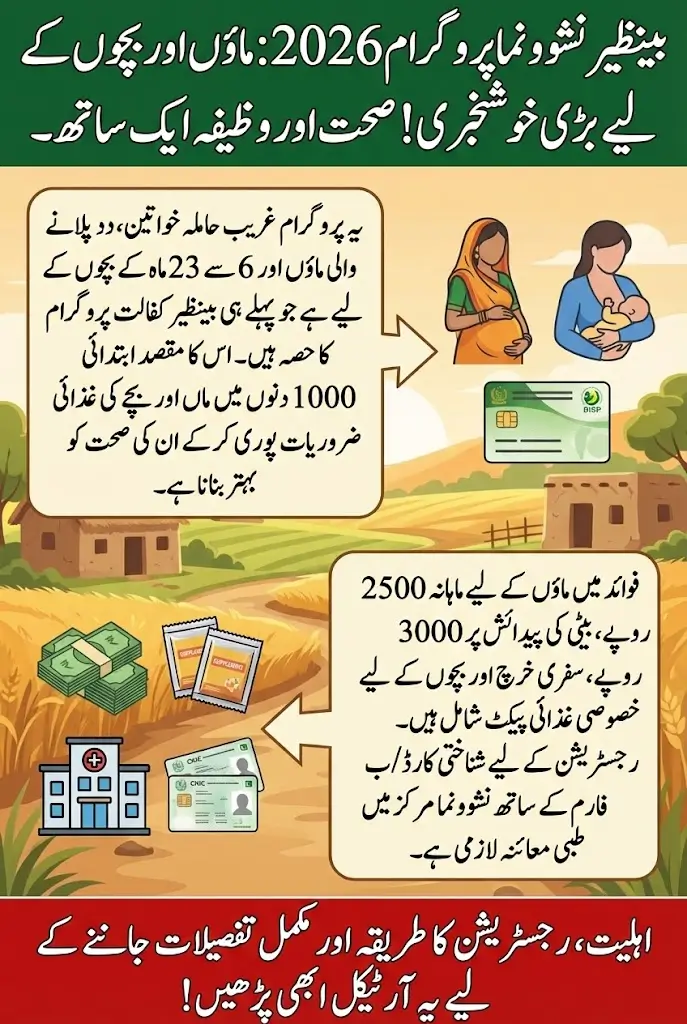
The program provides a combination of cash assistance and nutritional support. Financial aid helps families manage expenses during pregnancy and early childhood, while nutritious food and supplements ensure the proper growth of infants. Benefits are monitored through regular medical checkups at Nashunoma centers, ensuring every recipient receives consistent support.
Cash assistance varies based on the beneficiary, with newborn girls receiving slightly higher benefits to encourage gender equity. Nutritional support includes iron and folic acid tablets, high-energy food, and other essential supplements.
- Pregnant women receive 2,500 rupees per month
- Breastfeeding mothers receive 2,500 rupees per month
- Families get 3,000 rupees on the birth of a girl
- A travel allowance of 500 rupees per visit
- Children receive specialized, nutritious food
These benefits provide both financial and nutritional security, promoting healthier mothers and children.
Also Read: Good News! Punjab Government Introduces Easy Online Licensing Without Physical Test
Step-by-Step Guide to the Nashunoma Enrollment Process
Enrollment is carried out at designated Nashunoma centers or government hospitals. Applicants must bring valid identification and undergo a medical examination to confirm eligibility. The process ensures accurate record-keeping and that assistance is provided to genuine beneficiaries.
The steps involve verification of documents, medical assessments for mothers and children, and completion of registration forms. After enrollment, families begin receiving monthly financial support and nutritional items without interruption.
- Visit the nearest Nashunoma center or government hospital
- Present your CNIC for identification
- Provide the child’s B-Form if enrolling a child
- Fill out the registration form at the center
- Undergo medical checkups and growth assessments
- Receive confirmation and begin receiving program benefits
Following these steps ensures smooth enrollment and uninterrupted support.
Key Policy Notes for Nashunoma Beneficiaries
Policies of the Nashunoma Program are designed to maintain consistent nutritional support. Since 2018, government guidelines have emphasized early childhood nutrition, continuous health monitoring, and supplementation for mothers. These measures aim to reduce malnutrition rates and improve long-term health outcomes for low-income families.
The program pays special attention to children under three years and expectant mothers. Regular health visits, nutritional food, and supplements are mandatory for eligible families to maintain program benefits.
- Children must attend school once of school age
- Families must complete scheduled health checkups
- Children under 1000 days receive priority support
- Pregnant women receive essential supplements like iron and folic acid
- Infants and young children are provided nutritional food items
Policies ensure that health and nutrition support continues uninterrupted, improving outcomes for both mothers and children.
Stipend Schedule of the Benazir Nashunoma Program
The stipend schedule of the Benazir Nashonuma Program is given below
| Category | Monthly Benefit | Additional Support |
|---|---|---|
| Pregnant Women | 2,500 PKR | Supplements + Travel Allowance |
| Breastfeeding Mothers | 2,500 PKR | Nutritional Support |
| Newborn Girls | 3,000 PKR | Extra Birth Grant |
| Children 6–23 Months | Food Items | Growth Monitoring |
This gives a clear overview of the support provided to each beneficiary category.
Importance of the First 1000 Days for Children
The first 1000 days, from conception to a child’s second birthday, are critical for lifelong health. Proper nutrition during this period significantly influences immunity, growth, cognitive development, and overall well-being. The Nashunoma Program targets this stage to prevent long-term malnutrition and developmental issues.
Mothers are provided guidance on diet, supplements, and breastfeeding practices. Infants receive high-quality food that supports energy, growth, and brain development, ensuring a strong start to life.
- Early nutrition supports immunity and brain development
- Proper diet reduces risk of stunted growth and learning difficulties
- Malnutrition during infancy can cause irreversible health issues
- Adequate nutrition improves school performance and physical strength
- Early intervention results in healthier, more capable children
One-line conclusion: Support during the first 1000 days establishes the foundation for a healthier future for children.
Also Read: Govt Announces Two Nationwide Vacations For Shab-e-Barat and Kashmir Day
Final Words
The Benazir Nashunoma Program 2026 provides critical financial and nutritional support to vulnerable families, ensuring healthier pregnancies and better childhood development. The program’s structured approach and clear eligibility rules allow low-income families to access benefits efficiently and safely.
By focusing on maternal health and early childhood nutrition, the program contributes to the long-term development of Pakistan’s future generations. Mothers and children who receive these benefits have improved growth outcomes, better health, and stronger life opportunities.
Also Read: MAECI Scholarship 2026 Pakistan: Fully Funded Study Opportunities in Italy For Pakistani Students
FAQs
Who can apply for the Benazir Nashunoma Program 2026?
Pregnant women, breastfeeding mothers, and children aged 6–23 months who are part of the BISP Kafaalat Program are eligible to apply
What documents are needed for enrollment?
Applicants need a CNIC, and for children, a B-Form or birth certificate is required for verification.
How much financial support is given to beneficiaries?
Mothers receive 2,500 rupees per month, while newborn girls receive an additional 3,000 rupees birth grant.
Where can I register for the Nashunoma Program?
Registration takes place at Nashunoma centers or government hospitals with medical evaluations for verification.
Do children receive food under the program?
Yes, children aged 6–23 months receive nutritious food to support healthy growth and development.