
Ehsaas Program Online Registration Guide 2026
The registration system of the Ehsaas Program has changed completely in 2026, which has caused confusion among many families who want to apply for the Rs. 13,500 quarterly assistance. Since the online portal is no longer accepting new applications, it has become necessary for applicants to understand the updated registration methods and follow the correct steps to get enrolled in the program.
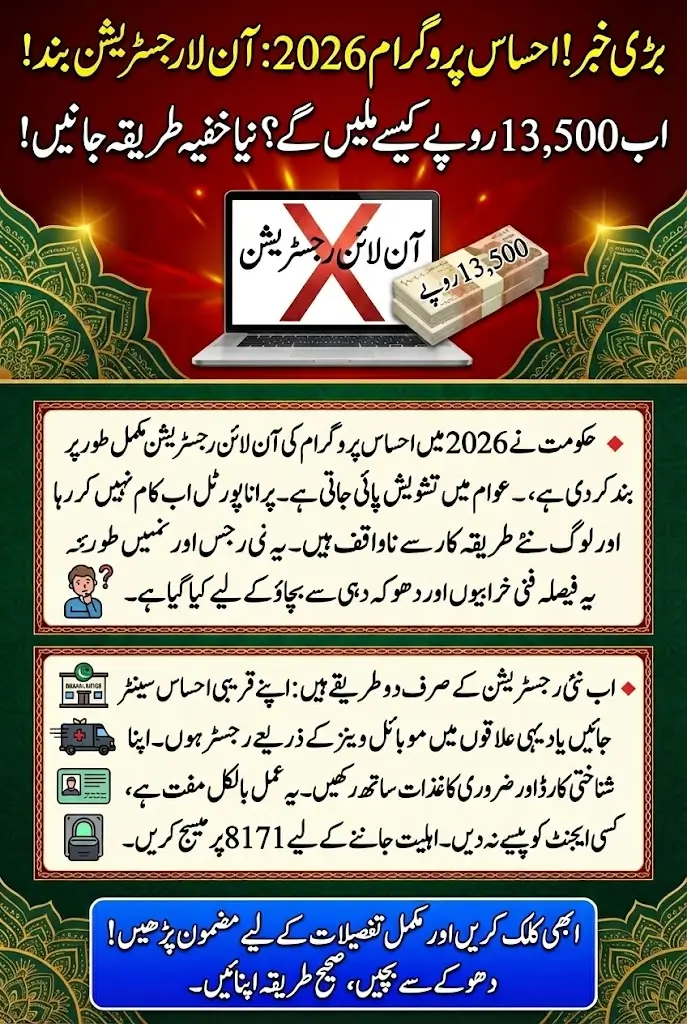
This article explains the reasons behind the portal closure, the two active registration methods, eligibility criteria, post-registration process, fraud protection steps, and what families should do until the new online system launches. Everything is written in simple and human language, ensuring easy understanding for all readers.
Alos Read: Benazir Income Support Programme 2026 New Installment Collection Method via Campsites & POS Agents
The Truth About Online Registration: What Changed and Why?
Many citizens attempting to register for Ehsaas benefits have discovered that the previously functional online portal and mobile application are no longer accepting new registrations. This has created considerable confusion, with numerous individuals searching for web-based registration options that no longer exist. The government made the strategic decision to temporarily suspend digital registration platforms following comprehensive reviews that revealed significant challenges.
The following points explain why the online system was closed
- Difficulty in verifying household conditions through online submissions
- Digital divide limiting access for vulnerable families
- Server overload and slow performance during peak usage
- Biometric verification failures in remote applications
- Security concerns regarding fraud and data protection
Technical issues also plagued the online registration infrastructure. Server overloads during peak application periods created frustrating delays, while security vulnerabilities raised concerns about data protection and fraudulent applications. The system experienced difficulties in real-time biometric verification, a critical component for preventing duplicate registrations and ensuring program integrity.
When Will Online Registration Resume?
The government has confirmed that a new and improved online registration system is under development. However, no exact launch date has been announced, as the priority is to build a secure, reliable, and user-friendly platform. The updated system will include stronger biometric integration, better performance, and features designed to support applicants with limited technical knowledge.
Once released, the new online portal is expected to provide multiple language options, improved fraud detection, and a mobile-responsive layout. The new platform will also incorporate artificial intelligence to detect fraudulent applications and streamline the verification process. Until the upgraded online portal becomes operational, all new registrations must be completed through the two physical registration methods outlined below.
Alos Read: 8171 Payment SIM Verification: Step-by-Step Guide For New Families to Receive 13,500 Directly
Current Registration Method One: Ehsaas Program Centers
Ehsaas Centers remain the main registration method in 2026, providing a structured and verified process for new applicants. These centers are located in district headquarters, tehsils, and major city areas, helping people access registration support close to their homes. Trained staff assist with documentation, biometric verification, and household surveys.
Applicants can easily find their nearest center by sending their city name to 8171, calling the program helpline, or asking at their union council office. Centers are designed to handle large numbers of applicants, and visiting during non-peak hours can reduce waiting times.
Important things to carry when visiting an Ehsaas Center
- Original CNIC issued by NADRA
- Proof of residence such as utility bills or rental papers
- Supporting documents like income papers, medical reports, or school certificates
- Renewed CNIC if your previous one has expired
- Additional documents if they support your eligibility
At the center, staff will verify your identity, collect biometric data, and conduct a household survey. The survey includes questions about income, assets, dependents, and living conditions. All information must be accurate to avoid delays or disqualification.
Current Registration Method Two: Mobile Registration Vans for Rural Women
Mobile registration vans have been deployed to help women in rural and remote areas who face travel and cultural barriers. These vans contain all the equipment found in permanent centers, including biometric scanners and survey systems, ensuring full-quality registration.
Female staff members handle most of the process to create a comfortable environment for rural women. The vans follow scheduled routes announced by district administration, union councils, and local community leaders. In many areas, schedules are also shared through WhatsApp groups.
Key details about mobile van operations
- Vans visit remote villages on scheduled dates
- Staff members perform full biometric verification
- Female officers handle registration for comfortable interaction
- Local announcements and union councils share arrival schedules
- Vans help families who cannot reach distant Ehsaas Centers
This method increases rural enrollment and allows staff to observe real living conditions, ensuring accurate NSER scoring.
Understanding Eligibility Criteria for 2026
Eligibility in the 2026 Ehsaas Program is determined through the National Socio-Economic Registry (NSER) system. This scoring model evaluates income, household size, assets, and special circumstances to identify families most in need. Those with lower income, high dependents, or vulnerable household members have a higher chance of qualifying.
Urban and rural areas have different poverty thresholds, and the system considers these factors while calculating eligibility. Families headed by widows, divorced women, disabled individuals, or elderly persons also receive special preference based on their vulnerability level.
Applicants who do not qualify usually fall into these categories
- Government employees at any administrative level
- Employees of autonomous government bodies
- Private-sector workers with stable documented income
- Households that own expensive vehicles or multiple properties
- Families with high bank balances or strong financial assets
Eligibility is based strictly on verified information, and incorrect details can negatively impact results.
Post-Registration: What Happens Next
After registration through a center or mobile van, the application enters the verification stage. This process takes 30 to 60 days depending on the accuracy of your information and whether additional verification is needed. Some families may receive unannounced home visits for physical confirmation of living conditions. After verification, applicants can send their CNIC to 8171 to check the final result. If approved, they receive details about the payment collection process and the instructions for receiving their first Rs. 13,500 installment.
| Stage | Process Explanation |
|---|---|
| Registration | Submission of CNIC, documents, and biometric data |
| Verification | NSER scoring and home visits if required |
| Approval | Eligibility confirmed via 8171 message |
| Payment | Collection through designated banks or centers |
Keeping your phone number active and your CNIC updated helps avoid delays in receiving updates.
Protecting Yourself from Registration Fraud
The closure of the online registration portal has led to an increase in fraudulent activities. Some individuals claim to offer paid registration services or guaranteed approval. These claims are false, and no one is allowed to charge fees or promise results under the Ehsaas system. Applicants must register only at official Ehsaas Centers or authorized mobile vans. Any request for money or personal data outside official channels must be reported immediately.
- Never pay anyone for registration or updates
- Do not share CNIC or biometric details with unauthorized persons
- Register only at official centers and mobile vans
- Report suspicious activity to the helpline of the Ehsaas Program
- Keep your registration slip and documents secure
Following these steps protects your identity and ensures a fair registration process.
Final Words
The updated registration methods for the Ehsaas Program in 2026 ensure that deserving families receive assistance without relying on the suspended online portal. Applicants should use Ehsaas Centers and mobile vans to complete their registration process without delay.
The improved payment system and structured verification ensure that the Rs. 13,500 quarterly assistance reaches the right families. Staying informed and following the correct procedures will help you secure your financial support smoothly and safely.
Questions and Answers
Is the online Ehsaas registration portal working in 2026?
No, the portal is temporarily closed, and all new registrations must be completed in person through centers or mobile vans.
How can I check my eligibility after registration?
You can send your CNIC number to 8171 and receive your eligibility status within a few seconds.
What documents should I bring for registration?
Your original CNIC, proof of residence, and optional supporting documents like medical or income records should be carried for verification.
How long does the verification process take?
It usually takes 30 to 60 days depending on your case and whether additional verification or home visits are required.
Are mobile registration vans available everywhere?
Mobile vans operate mainly in rural districts and follow scheduled routes announced by local authorities and union councils.